
Over 1,000 Colleges Are Mastery Transcript Ready


Today, we're celebrating a milestone for the Mastery Transcript Consortium and the movement to recognize students for more than their grades.
1,011 colleges and universities are now Mastery Transcript Ready, including all eight Ivy League institutions.
For decades, one of the biggest questions facing educators interested in measuring learning differently has been a simple one: But will colleges accept it?
Nine years ago, a group of 54 schools set out to answer that question.
It started with a different idea of what a transcript could be
In 2014, Scott Looney, Head of School at Hawken in Cleveland, began questioning one of the most enduring conventions in education: the high school transcript.
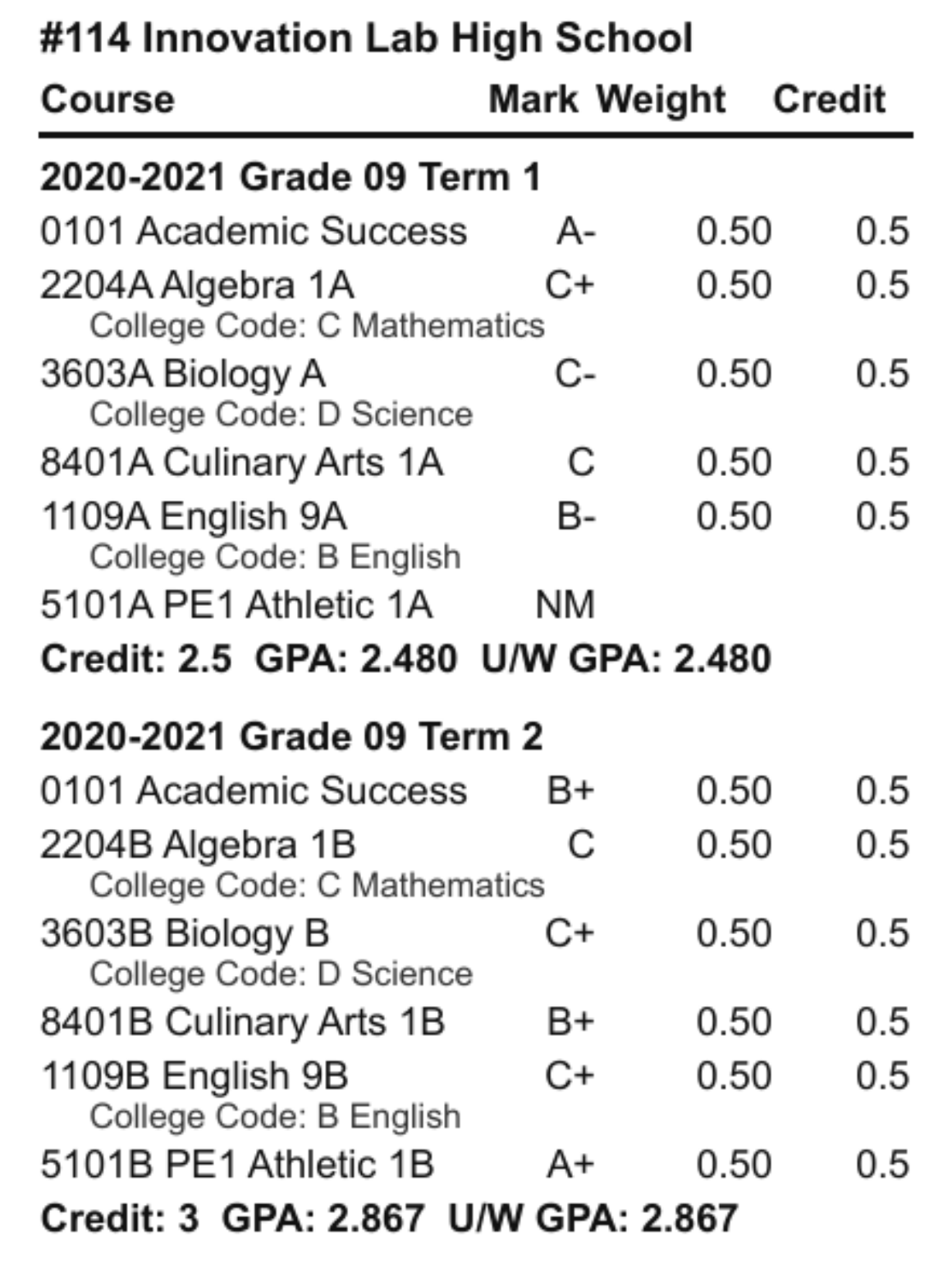
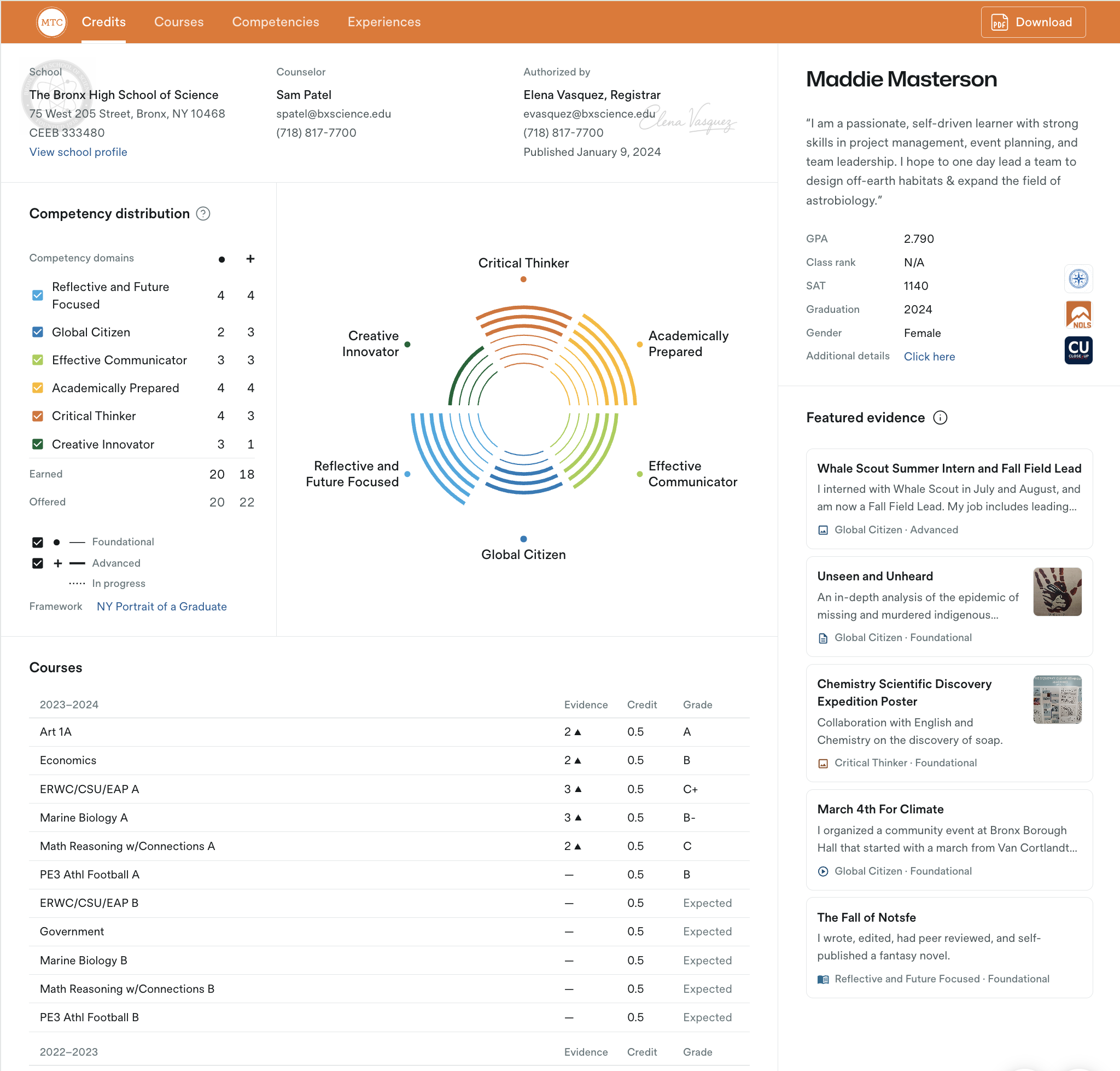
The traditional transcript tells colleges which courses a student took and what grades they earned. But it says little about what a student can actually do. It doesn't show the projects they've built, the problems they've solved, or the skills they've developed along the way.
Scott imagined something different: a transcript that showed students in three dimensions, amplified their unique strengths, and gave colleges the opportunity to see the actual work behind a student's accomplishments.
Traditional transcript
Mastery Transcript
But designing a better transcript was only half the challenge.
One school couldn't change the system alone
Colleges receive thousands of applications every year. Even if an admissions office liked the idea of a richer transcript, it was difficult to build a new process around an unfamiliar record arriving from one school.
And schools were understandably reluctant to change their transcript if doing so might jeopardize their students' college prospects.
Schools needed colleges' acceptance, and colleges needed enough schools using the transcript to make the change worthwhile.
So Scott started making phone calls. He reached out to independent schools across the country that shared his frustration: schools doing extraordinary things in their classrooms, but struggling to represent that learning through a conventional transcript.
In 2017, 54 founding schools came together to launch the Mastery Transcript Consortium. What began as one school's idea became a collective effort to change how student learning was recognized.
And colleges began to listen.
From 54 schools to 1,011 colleges
Over the following nine years, the network grew.
Each new school helped introduce the Mastery Transcript to more colleges. Each new college willing to recognize it gave more schools the confidence to rethink how they assessed and represented learning.
Today, 1,011 colleges and universities are Mastery Transcript Ready, including Harvard, Yale, Princeton, Stanford, MIT, and institutions across 15 countries and five continents.
It's evidence that schools don't have to choose between measuring what matters and preparing their students for college. And it opens the door for more schools to move beyond grades with confidence.
To everyone who made this possible, thank you
None of this was inevitable.
We owe this milestone to Scott and the original 54 founding schools who were willing to challenge a century of convention.
To the school leaders who took the risk of doing something different. To the teachers who spent years developing better ways to assess learning. To the admissions officers who took the time to understand unfamiliar records. And to the MTC colleagues who built and sustained this work, year after year.
And especially to the students and families who trusted that their accomplishments would be recognized.
Every one of those decisions helped make the next one easier.
The Mastery Transcript Consortium has always been more than a piece of software or a different way to report grades. It's a community of educators who believe that students deserve to be seen for what they know and can do.
What's next?
The transcript might seem like a small part of education. But what we choose to measure at the end of high school shapes what schools prioritize from the very beginning.
For too long, the limitations of the traditional transcript have constrained what schools feel free to teach, assess, and celebrate. The work of the last nine years has begun to remove that constraint.
Our next challenge is to make it easier for many more schools to turn authentic student work into trusted evidence of learning, and to give every student a record that reflects more of who they are and what they can do.
The first 1,000 colleges helped prove that a different kind of transcript is possible. Now it's time to make it available to far more students.
To everyone who helped us get here, thank you.
Sincerely,


Matt Sornson and Aaron Rasmussen
Matt Sornson and Aaron Rasmussen are the co-founders of Legend, the company behind Mastery.org. Matt previously built and led Clearbit, the B2B data company acquired by HubSpot. Aaron co-founded MasterClass and founded Outlier.org, the college-credit course platform later acquired by Savvas.